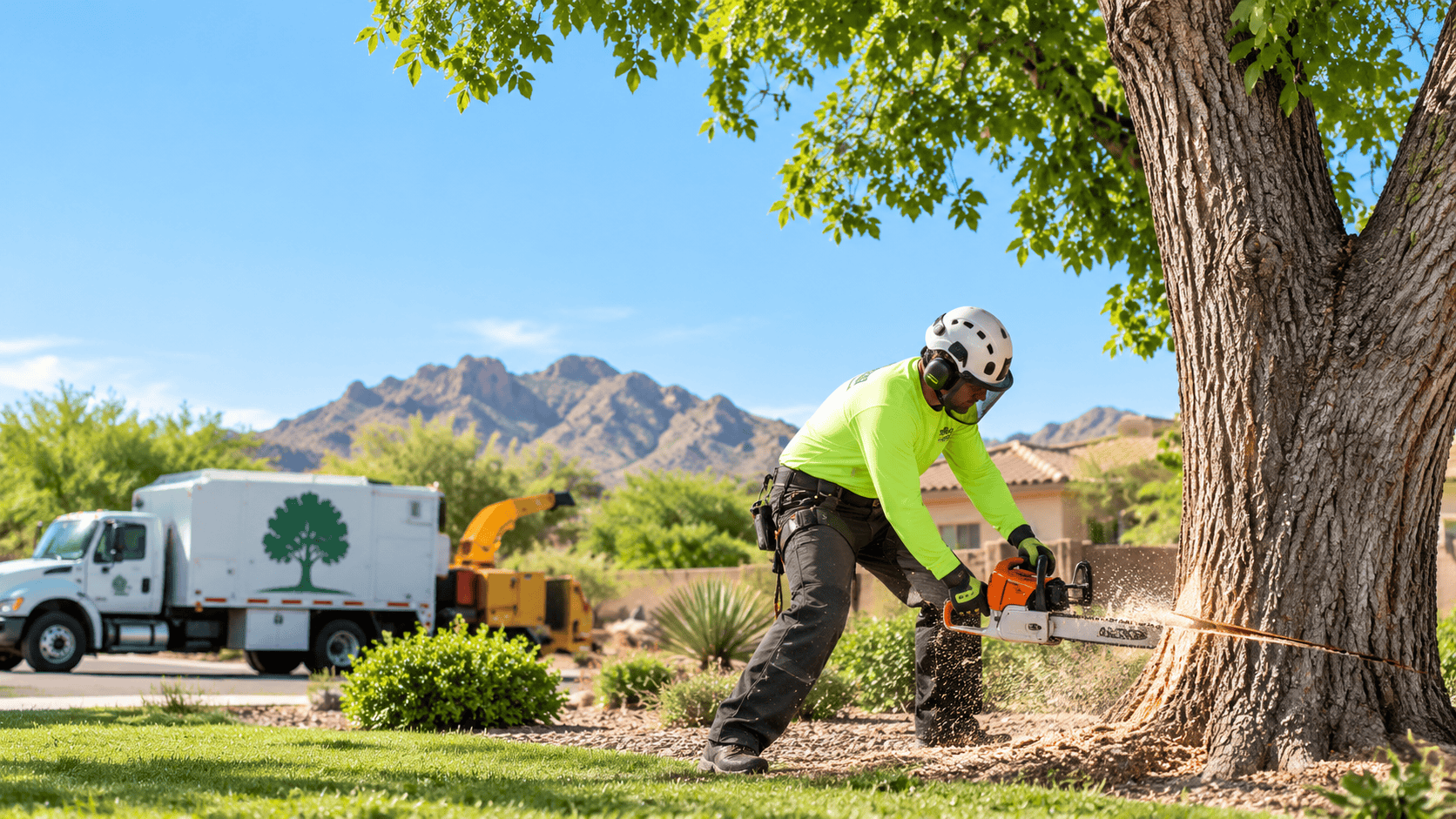
Late fall through winter, roughly November to February, is the best window for trimming most trees in this part of Arizona. Growth slows once the heat breaks, and you can skip the monsoon stretch entirely, since it runs June 15 to September 30. That timing keeps tree trimming in Queen Creek from turning into a stressful, sunburned headache for your trees.
That’s the short version. Real yards are messier. You might have a palm by the driveway, a palo verde out front and a lemon tree somewhere in back, and each one wants something different.
Why Timing Matters for Queen Creek Tree Trimming
Think of a cut as a scrape on your knee. In cool weather it closes up and you forget about it. In July, with the thermometer sitting north of 105°F, that same scrape heals slowly, and the tree is already spending everything it has just to stay hydrated. Prune at the wrong time and you’ll often see leaf drop, scorched bark, or a tree that just looks tired for months. Prune at the right time and you’ll barely notice anything happened.
Winter Is Usually the Answer
When neighbors ask us about Queen Creek AZ tree trimming, we say winter nine times out of ten. Dormant shade trees like mesquite and ash handle shaping really well right now. Here’s why it works:
- Cooler days are easier on the tree and on the crew
- Bare, slow-growing branches show you the structure clearly
- Pests aren’t very active yet
- Cuts heal before spring growth kicks in
One catch. If a hard freeze is in the forecast, wait a week. Fresh cuts hate frost.
Palms and Flowering Trees Run on Their Own Clock
Palms hang onto old fronds for a reason, because they insulate the trunk through cold nights. So the tree trimming Queen Creek palms get should wait until the last frost has passed, usually by spring and into early summer.
Palo verde is a different story. Trim it right after the yellow flowers fade. Cut earlier and you lose the show you waited all year for.
Summer: Mostly Hands Off
Heavy thinning in summer pulls away shade the bark depends on. Trunks can sunburn, just like shoulders. Monsoon season piles on humidity and wind, which doesn’t help a fresh wound either.
Still, there are exceptions. Any decent Queen Creek tree trimming schedule leaves room for emergencies like dead limbs, cracked branches, or anything leaning over your roof. Don’t sit on those.
Seasonal Cheat Sheet
- Mesquite, ash and other shade trees: November through February
- Palo verde: just after the spring bloom
- Palms: after the last frost, into early summer
- Citrus: late winter, once frost danger fades
- Dead or risky limbs: whenever you spot them
Plan Ahead, Save Yourself the Rush
Do a walk-around in October, coffee in hand. Look for limbs rubbing together, branches creeping toward the roof, or canopy crowding a wall. Snap a few phone photos while you’re at it.
Winter fills up fast, so booking early for tree trimming in Mesa Az usually gets you a better date. It also gives you more time with a certified arborist who can explain each cut before it happens.
FAQs
Can I trim trees in summer?
Light cleanup and hazard removal, yes. Save heavy thinning for cooler months.
How often do trees need trimming?
Most do fine with a trim every one to three years, depending on species and how fast they grow.
Is winter okay for palms?
Better to wait. Those old fronds help protect the trunk until the last frost is behind you.
Ready to get your trees on the right schedule? Call Arizona Urban Arborist at (602) 813-8733, stop by 9934 E Lobo Ave, Mesa, AZ 85209, or request a estimate at arizonaurbanarborist.com.