A tree needs to come down when it’s dead, badly split, heavily diseased, or leaning toward your house or a power line. Monsoon season raises the stakes, because gusts above 58 mph (the National Weather Service’s cutoff for a severe storm) can drop a limb that looked fine the week before. Knowing what to look for makes tree removal in Tempe a calm decision instead of a panicked one.
Nobody buys a house hoping to cut down the big shade tree out back. We get it. But trees age, desert soil is unforgiving, and some of them reach a point where keeping them costs more than losing them.
When Is Tempe Tree Removal Really the Right Call?
Plenty of rough-looking trees bounce back with a good trim or a change in watering, so there’s no need to rush. The harder cases are the ones where the damage can’t be undone. If half or more of the canopy is dead, or the trunk itself is hurt, recovery is a long shot. A tree that has survived drought, a freak freeze and a pest outbreak in the same few years has usually had enough.
Warning Signs in the Trunk and Roots
A tree can look leafy and still be failing underneath. Next time you’re out with the hose, take a minute to look for:
- Long vertical cracks or splits running down the trunk
- A lean that’s new, or soil heaving up on one side
- Big dead branches sticking up through the canopy
- Wood that’s soft, crumbly or sounds hollow when tapped
- Roots that are exposed, or that got chopped during a construction job
Spot one of these and it’s worth getting a second opinion. Spot a couple together and you shouldn’t wait long.
Disease and Pests That Spread
Mushrooms around the base, sap seeping from the bark, peeling sheets of bark, leaves dropping at odd times of year: all of it tells you something’s off. Some problems can be treated. Advanced root rot and heavy borer infestations usually can’t. Sick trees also have a habit of passing trouble to healthy ones nearby, so one removal can quietly turn into three if you sit on it. Catching it early keeps your options open.
When the Tree Is Healthy but in the Wrong Spot
Sometimes there’s nothing wrong with the tree at all. It simply outgrew its location, and homeowners asking about tree removal in Tempe often land right here. Common situations include:
- Roots lifting driveways, pool decks or sewer lines
- Branches resting on the roof or creeping toward power lines
- A tree planted too close to the house, now at full size
- Fast growers, like eucalyptus, squeezed onto a small lot
None of that is the tree’s fault, but the repair bills add up fast.
After a Storm
Monsoon rain soaks the ground, roots loosen, and the wind finds every weak point. If a limb has torn away or the trunk has shifted, stay clear and get it checked quickly, since damaged trees can fail with very little warning. Fast Tempe tree removal after a storm protects your roof, your cars and the people in your yard.
Permits, Safety and Doing It Properly
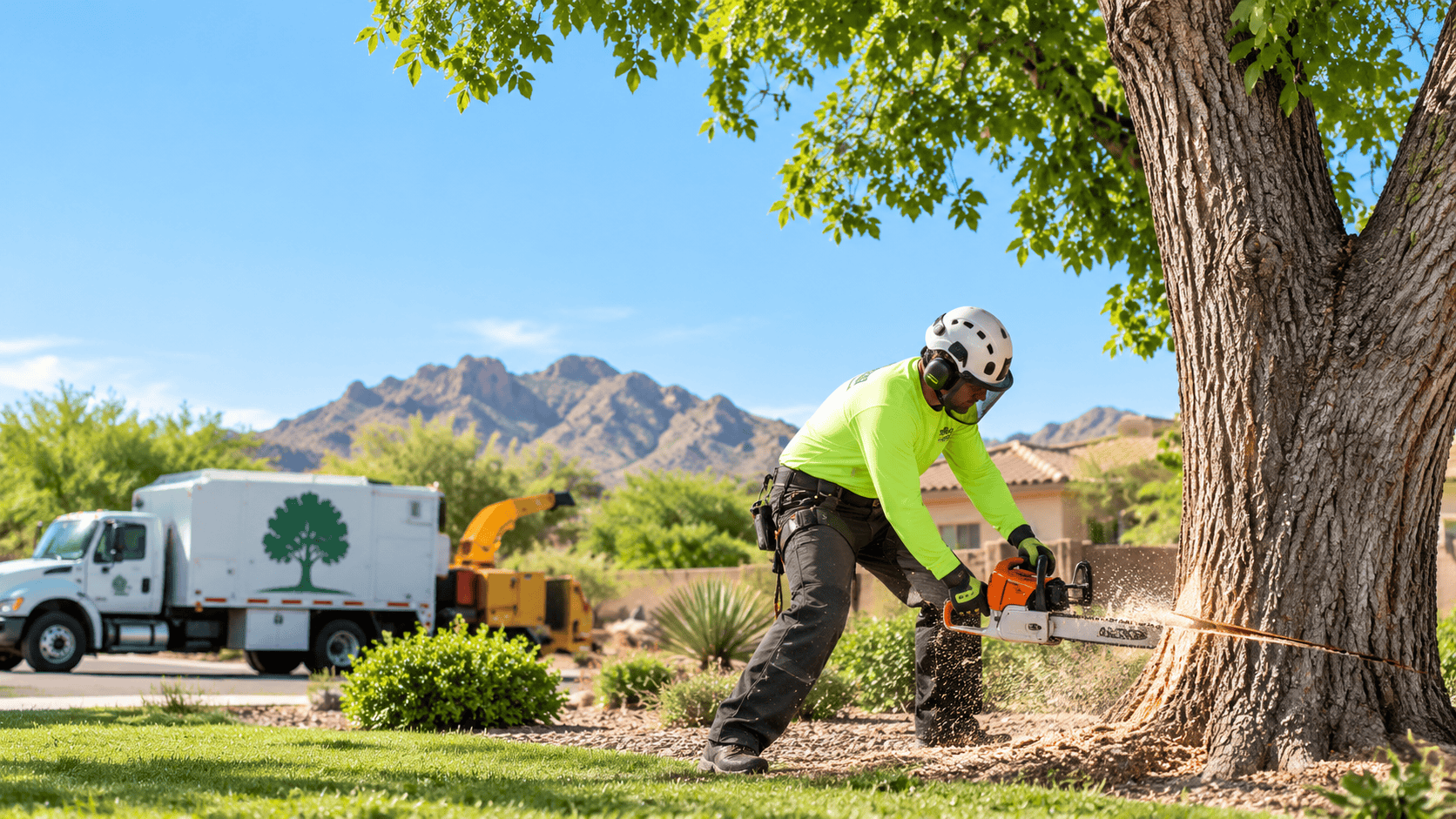
Taking down a large tree is not a weekend project. Heavy limbs, tight backyards, ladders and chainsaws are exactly how people end up in the emergency room. It’s also smart to check local rules first, because some trees may need approval before they come down. A good tree removal Tempe AZ professional will look the tree over, lay out your choices, and tell you straight if it can stay.
One Last Thought
Removing a tree doesn’t have to feel like a loss. Done well, it clears the way for a safer yard and, often, a replacement better suited to the desert. If you’re on the fence, get a proper assessment before you decide.
Questions about a tree on your property? Call Arizona Urban Arborist at 602-813-8733 or visit 9934 E Lobo Ave, Mesa, AZ 85209 to book an assessment.
FAQs
How can I tell if my tree is dead?
Scratch a bit of bark off a small twig. Green underneath means it’s alive; brown and dry means it probably isn’t. Brittle branches and no new leaves during the growing season point the same way.
Is a leaning tree always dangerous?
No. A slight lean that’s been there for years is often harmless. A sudden lean, especially with soil lifting near the roots, needs attention right away.
Is removal better than trimming?
Not always. Trimming handles minor problems well, but removal makes more sense when the tree is dead, unstable or past treatment.