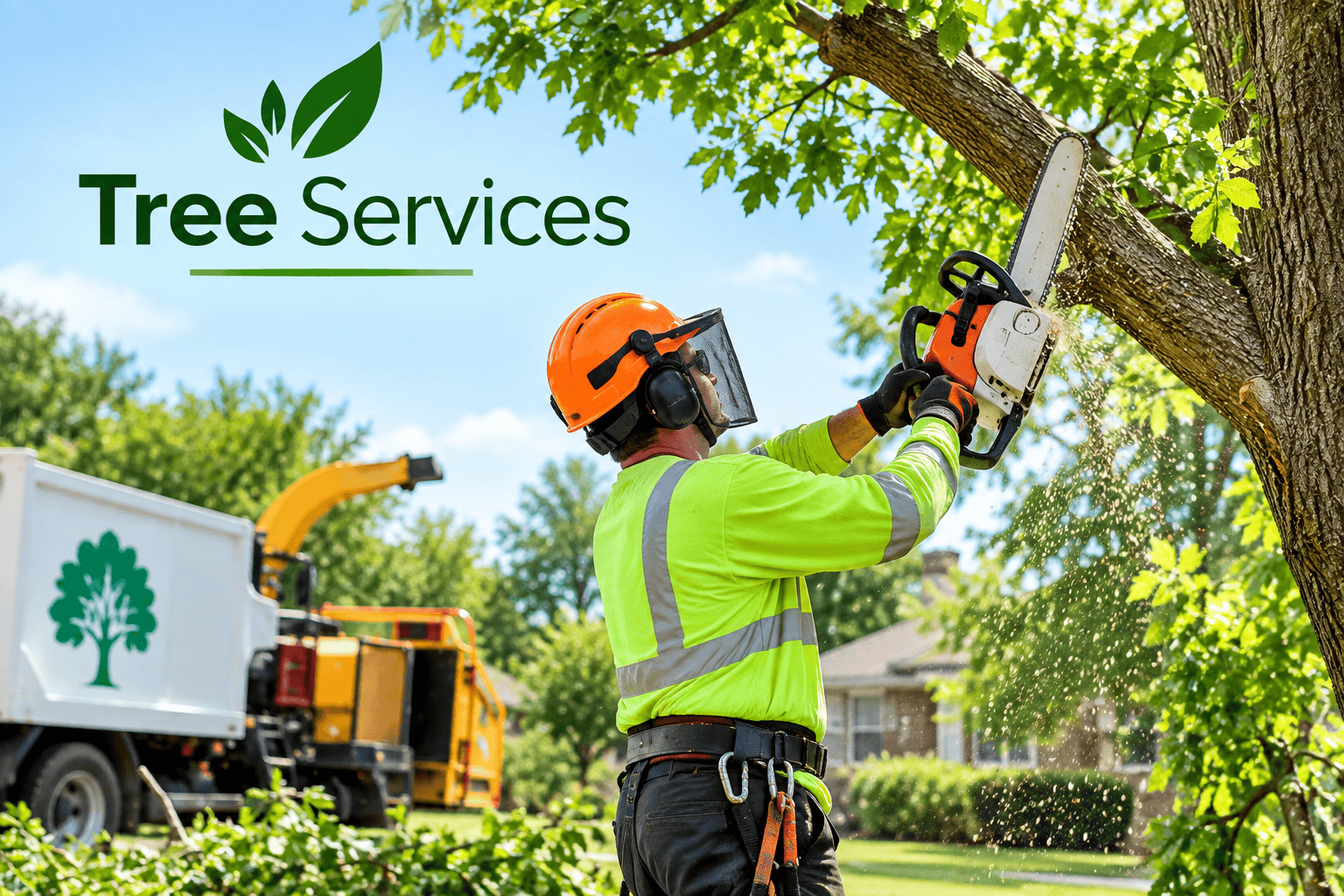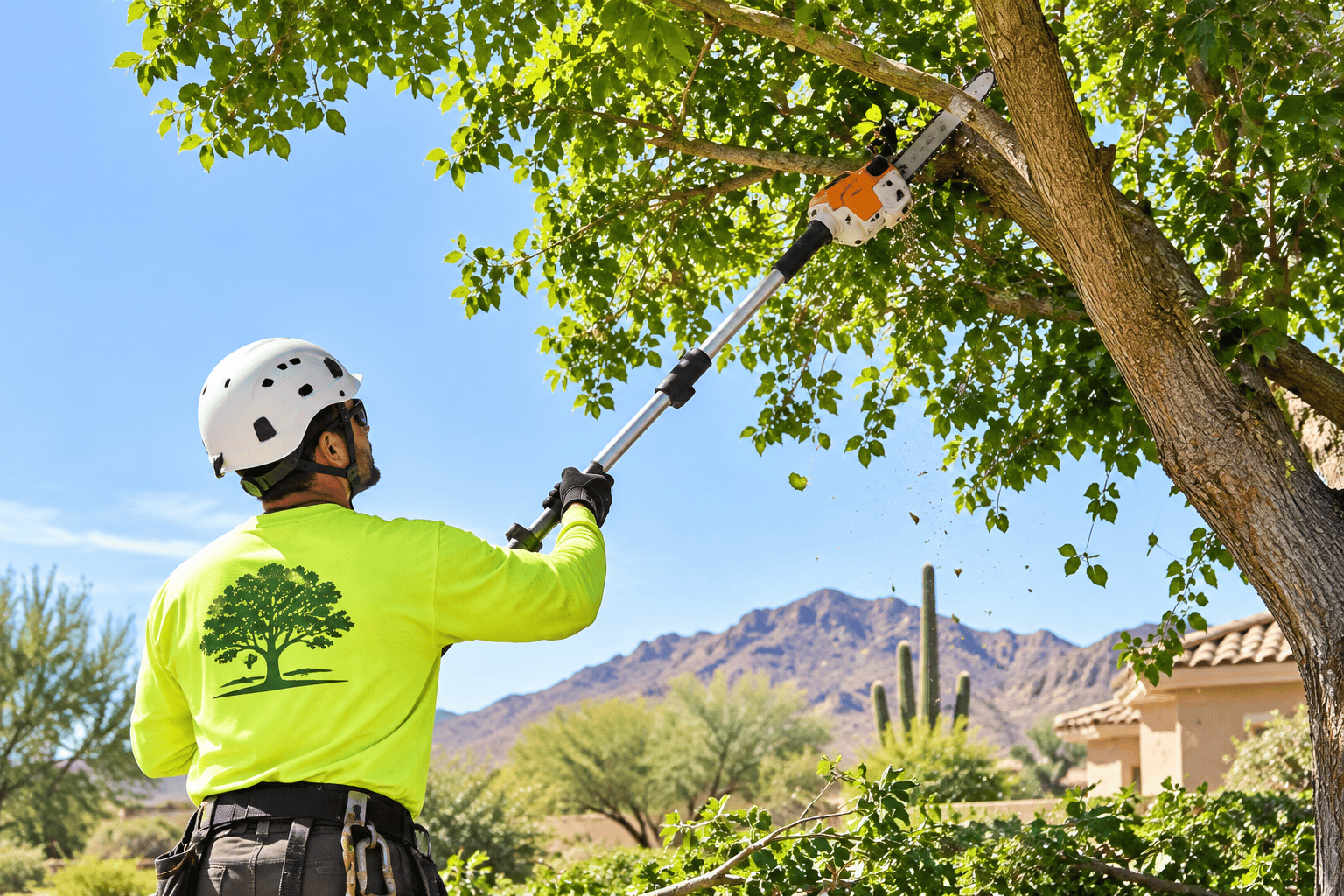
A tree can look green, full, and totally fine from the driveway while quietly hiding weak branch unions, early decay, or root stress underneath. That’s precisely why so many homeowners across the valley still reach out for tree trimming services in SanTan Valley even when nothing looks obviously wrong – because “healthy-looking” and “structurally sound” aren’t always the same thing.
The Sneaky Signs Your Trees Need Tree Trimming Services in SanTan Valley
Trees are good actors. A canopy can stay lush even while the branches underneath are cracking under their own weight or growing at awkward, unstable angles. Sun scorch, minor pest activity, and old storm damage often hide deep inside the crown, invisible unless someone’s actually looking for it. That’s usually where trouble starts brewing long before a homeowner notices anything’s off.
Is Your Tree Actually as Strong as It Looks?
Honestly, most people can’t tell just by glancing up. A few quiet red flags worth checking for:
- Branches that cross or rub against each other repeatedly
- Uneven canopy weight, with growth heavier on one side
- Small cracks near branch joints that seem harmless
- New shoots (called “suckers”) growing rapidly near cuts or the trunk base
None of these scream emergency. But left alone, they slowly become one. This is exactly the kind of thing tree trimming services in SanTan Valley are trained to catch early.
Why SanTan Valley’s Climate Plays a Role
Arizona’s heat isn’t gentle on trees. With summer temperatures regularly crossing 110°F and monsoon winds hitting 50+ mph some seasons, branches that look fine in spring can become genuine hazards by August. Heat stress weakens wood fiber from the inside, so a tree can be dropping limbs without any warning sign visible from the ground. This is where tree trimming SanTan Valley homeowners schedule proactively tends to save a lot of headaches – and property damage – later.
What Happens If You Skip Trimming?
Skipping it doesn’t just mean a messier yard. Over time, ignored trees tend to:
- Develop weak limb attachments that fail during monsoon winds
- Block airflow, encouraging fungal growth in dense canopies
- Grow into power lines, roofs, or fences unnoticed
- Cost significantly more to fix once damage becomes structural
Basically, small problems compound quietly until they’re not small anymore.
How Arizona Urban Arborist Approaches This
At Arizona Urban Arborist, the team doesn’t just look at a tree – they look into it. Every visit involves checking branch structure, canopy balance, and early stress signals that most people would walk right past. Because SanTan Valley’s soil and heat patterns are so specific, generic trimming schedules don’t really cut it here. That’s the whole reason locals lean on tree trimming services in SanTan Valley that actually understand desert-adapted species like mesquite, palo verde, and desert willow, rather than a one-size-fits-all crew.
Regular, seasonal tree trimming in SanTan Valley properties isn’t about looks – it’s preventative care, plain and simple. A well-timed trim now often means one less emergency call after the next big windstorm.
Ready for a Tree Check-Up?
If it’s been a while since your trees had a real inspection, don’t wait for a branch to make the decision for you. Arizona Urban Arborist offers professional tree trimming services in SanTan Valley designed around local climate, soil, and species – reach out today for an assessment and give your trees (and your roof) some peace of mind. You can call 602-813-8733 or visit 9934 E Lobo Ave, Mesa, AZ 85209 to get started.
FAQs
Q: How often should trees in SanTan Valley be trimmed?
Most desert-adapted trees do well with trimming once a year, though faster-growing species or trees near structures may need a check twice a year, especially before monsoon season.
Q: Can trimming actually prevent storm damage?
Yes – removing weak, crossing, or overly dense branches reduces wind resistance significantly, which lowers the chance of limb failure during Arizona’s monsoon storms.